
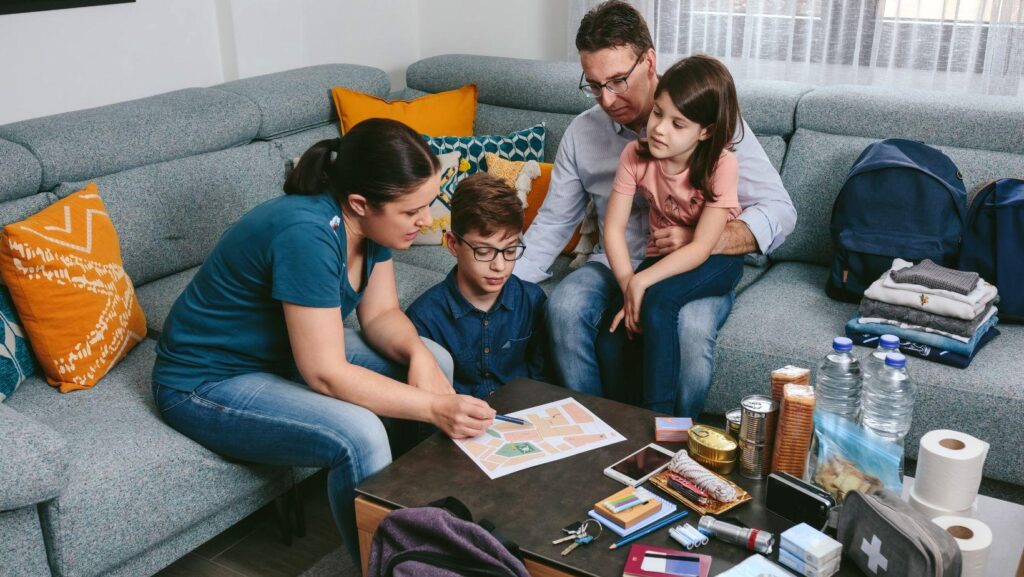
A disaster plan sounds like a binder. Most households that have one in any real sense do not own a binder; they own a short list of decisions already made, a box in a closet, and two people who know where the water shutoff is. That is the whole product, and it is cheap compared to the alternative.
The Canadian version of this problem has a particular shape. Spring flooding in river towns and in basements nowhere near a river, wildfire smoke and evacuation orders through the summer, ice storms and multi day outages in the winter, and heat events that now arrive in places with no air conditioning. The hazards differ by postal code, which is why a generic checklist copied off the internet tends to prepare you for somebody else's emergency.
So build it in the order that reduces risk fastest: know what is coming, stock for it, protect the paperwork, and then practice the exit.
Start With the Hazards That Actually Reach Your Address
Local risk is knowable. Provincial programs publish hazard information by region, and PreparedBC's hazard pages are a useful model of how to think about it, splitting seasonal threats like flood, wildfire and severe weather from year round ones like earthquake and power failure. Alberta's preparedness pages do something similar. Whatever province you are in, the exercise is to name three or four plausible events rather than planning for all of them equally.
Then get specific about the building. Research from the Institute for Catastrophic Loss Reduction makes the point that most basement flooding is not a river problem at all but overland flow, infiltration or sewer backup, which means the fix is often a backwater valve, a sump pump on a battery backup, and downspouts that discharge well away from the foundation. That is a different plan from the one a wildfire interface property needs, where the work is clearing vegetation and rethinking roofing and vents.
Supplies Are a Logistics Problem, Not a Shopping Problem
Two kits, not one. The home kit assumes you are staying: seventy two hours of water and food, a hand crank or battery radio, flashlights, batteries, a first aid kit, medications, cash in small bills, and a way to keep warm if the furnace is out. The grab and go bag assumes you are leaving in fifteen minutes, which is the realistic warning time for an evacuation order, and it lives by the door rather than in the crawlspace.
Maintenance is the part that quietly fails. Water rotates, batteries corrode, prescriptions expire, and children outgrow the spare clothes you packed two years ago. Pick a date, twice a year, and tie it to something you already do, like the smoke alarm check or the seasonal tire swap.
Documents and Coverage Carry the Recovery
Everything after the event runs on paper. Policy numbers, identification, ownership records, serial numbers, prescriptions, and photographs of each room taken before anything happened. Scan it, store it in two places, one of them offline, and keep physical copies of the few items that matter in the go bag. Claims move faster when the adjuster is handed a list instead of a memory.
Coverage deserves an hour of actual reading, because the gaps are specific rather than vague. Overland water and sewer backup are usually endorsements rather than base coverage. Sewer backup limits are often far below the cost of a finished basement. Living expenses during an evacuation may be covered, or may be capped at a number that assumes a short stay. Reviewing a Canadian home insurance policy against the three hazards you named earlier is the single highest value hour in this whole exercise, and it is best spent before the forecast gets interesting.
Rehearse the Exit and Keep the Building Honest
A plan nobody has walked through is a document, not a plan. Decide the meeting point if the house is unreachable, the out of area contact everyone calls when local lines are jammed, who collects the children, who handles the pets, and how the gas, water and power get shut off. Write the shutoff locations down, because the person who knows them is sometimes the person who is away.
Then keep the systems boring. Furnace and chimney serviced, eavestroughs cleared, sump pump tested with a bucket of water rather than assumed, roof inspected after wind events, trees pruned away from the service line, alarms tested monthly. Preparedness is mostly maintenance wearing a more dramatic name, and there are legal and regulatory expectations around preparedness that make the same point for workplaces.
Conclusion
Built this way, the whole thing takes a weekend and perhaps a few hundred dollars, spread over two trips to a hardware store and one phone call.
What it buys is not immunity. Floods still flood and fires still burn. What it buys is the difference between a bad week and a bad year, because the household that knows where the documents are, has coverage that matches the hazard, and has already decided who grabs the dog recovers on a timeline measured in days rather than seasons.
Review it once a year, ideally in the quiet season, and change it when the household changes. A new baby, an aging parent, a renovation, a move: each one makes last year's plan slightly wrong, and slightly wrong is easy to fix in March and expensive to discover in July.