

When it comes to school emergency preparedness, thinking ahead can feel as thrilling as a rollercoaster ride—minus the safety harness. It’s not just about fire drills and lockdowns; it’s about ensuring every student and staff member knows what to do when the unexpected happens. After all, nobody wants to be the one panicking while the rest of the class calmly exits stage left.
Imagine a world where students don’t just learn math and science, but also how to stay safe in a crisis. With a solid emergency plan in place, schools can turn potential chaos into a well-orchestrated routine. So let’s dive into the essentials of Canadian International School (CIS) emergency preparedness and discover how a little planning can go a long way in keeping everyone safe and sound. Because when it comes to emergencies, it’s better to be a prepared hero than a bewildered bystander.
School Emergency Preparedness
School emergency preparedness involves systematic strategies designed to manage unexpected situations. Effective preparedness requires the involvement of students, staff, and the community to create a comprehensive safety plan.
Importance of Emergency Preparedness
Emergency preparedness in schools like nexus.edu.sg plays a crucial role in safeguarding lives. When students and staff know their roles during crises, panic reduces significantly. Preparedness enhances response times and allows for effective communication. Well-informed individuals can execute safety protocols with confidence. Educating staff and students about potential emergencies cultivates a culture of safety. Informed responses minimize chaos and maintain order during critical incidents.
Common Types of Emergencies in Schools
Recognizing common types of emergencies helps tailor preparedness plans effectively. Natural disasters include earthquakes, tornadoes, and floods, posing significant risks. Additionally, medical emergencies can arise from injuries or health crises, requiring immediate attention. Violence-related incidents such as shootings or fights impact school environments and necessitate precautionary measures. Fires remain a persistent threat, warranting regular drills to ensure readiness. Lastly, hazardous material spills or chemical leaks can occur, demanding quick and efficient responses. Understanding these scenarios enables schools to develop targeted training and response strategies.
Developing a Comprehensive Emergency Plan
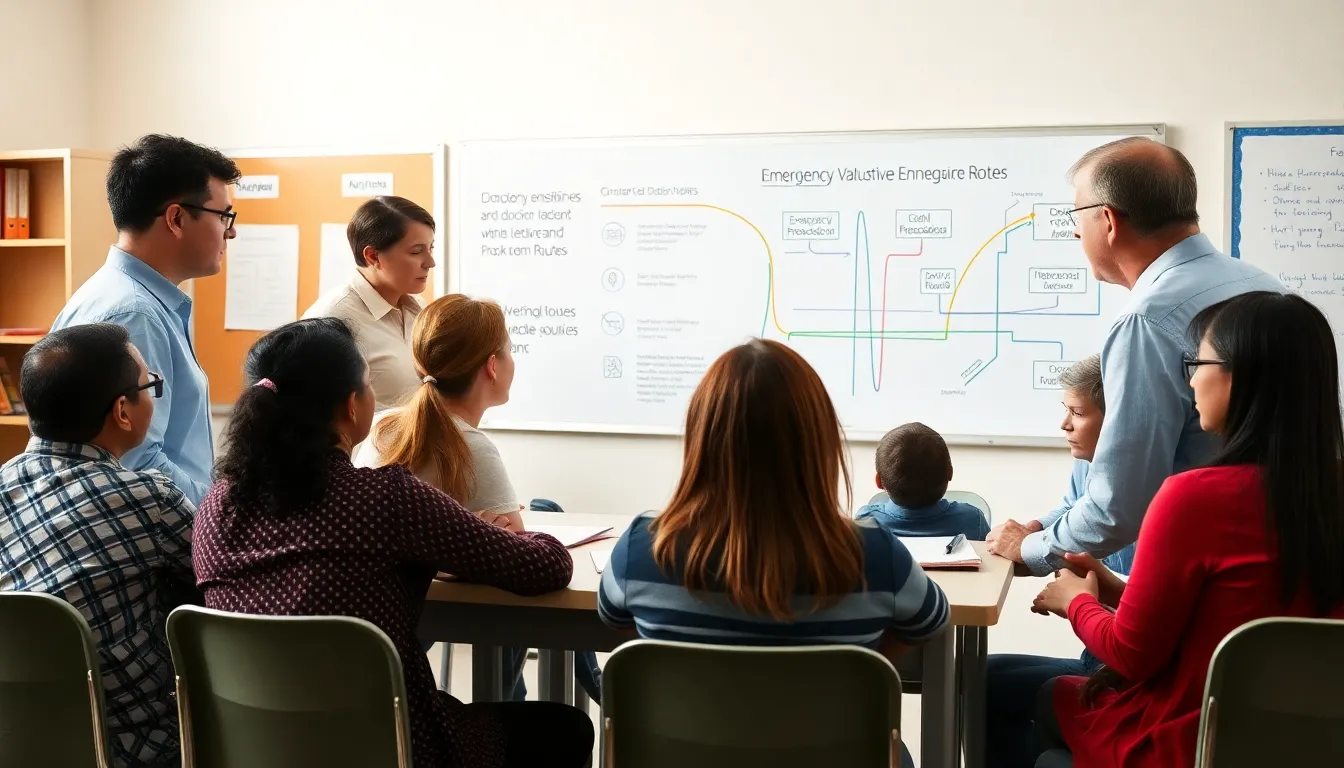
Creating a comprehensive emergency plan is essential for fostering a secure school environment. This plan should address diverse scenarios and outline clear roles for staff and students.
Key Components of an Emergency Plan
An effective emergency plan includes several critical elements. First, it outlines specific procedures for various emergencies, such as natural disasters or medical incidents. Next, communication protocols ensure that everyone receives timely updates during a crisis. Additionally, designated evacuation routes provide safe pathways for all individuals off-campus. Regular training drills reinforce these procedures, ensuring familiarity and effectiveness. Lastly, a post-incident review process helps identify areas for improvement, making future plans even more robust.
Involving Stakeholders in Planning
Involving stakeholders enhances the emergency planning process. Parents, faculty, and community members should actively participate in discussions about safety measures. Input from these groups brings diverse perspectives and helps identify unique vulnerabilities. Teachers can contribute insights about classroom dynamics, while parents often have concerns that need addressing. Collaboration with local emergency services ensures alignment of strategies and resources. Engaging these stakeholders fosters a shared commitment to safety, empowering everyone in the school community to act decisively during emergencies.
Training and Drills
Training and drills form a critical component of school emergency preparedness, equipping students and staff with the knowledge to respond effectively.
Conducting Regular Drills
Regular drills enhance familiarity with emergency protocols. Schools should schedule these drills frequently, covering various scenarios, such as fire evacuations and lockdown procedures. Conducting at least two fire drills per semester promotes readiness. It’s essential to simulate real-life situations to build confidence. Observing participation rates during drills provides insights into community engagement with safety practices. Ultimately, consistent drill execution reduces panic during actual emergencies, enabling everyone to act decisively.
Educating Students and Staff
Education reinforces the importance of safety in schools. Training sessions must clearly communicate individual roles in an emergency, ensuring everyone understands their responsibilities. Hosting workshops can provide valuable insights into proper response techniques. Engaging parents and local communities in safety education fosters a shared sense of responsibility. Utilizing visual aids, such as posters and handouts, aids retention of crucial information. Comprehensive education equips individuals to react calmly and effectively when faced with unexpected situations, ultimately safeguarding lives.
Effective Communication Strategies
Effective communication plays a vital role in school emergency preparedness. Schools must establish robust channels to ensure timely and accurate information dissemination to all stakeholders.
Communicating with Parents and Guardians
Schools need to communicate regularly with parents and guardians regarding emergency procedures. Sending newsletters or emails about safety protocols keeps families informed and engaged. Hosting meetings allows parents to ask questions and share concerns. Utilizing social media platforms aids in reaching a broader audience, ensuring messages are received promptly. Regular updates during a crisis reassure parents that the school prioritizes student safety. Schools can implement automated messaging systems to provide direct alerts about emergencies, enabling timely responses.
Utilizing Technology for Alerts
Technology enhances communication in emergencies significantly. Schools should implement alert systems that send instant notifications via SMS or emails to students, staff, and parents. Mobile applications designed for school communication can centralize information and provide updates in real-time. Integrating social media channels fosters quick information sharing during emergencies. Utilizing public announcement systems ensures clear communication throughout the school campus. Regular testing of these technologies guarantees reliability, effectively preparing everyone for future incidents.
Resources and Support
Schools can enhance emergency preparedness by leveraging available resources and support within the community.
Partnering with Local Authorities
Collaborating with local authorities strengthens school emergency preparedness. Local police, fire departments, and emergency medical services provide invaluable expertise, ensuring safety protocols align with community standards. Regular joint drills foster familiarity between school staff and emergency responders, improving coordination during real incidents. Partnering brings access to resources such as specialized training for staff and customized emergency plans, tailored to address specific risks related to the area. Establishing these connections also allows schools to receive timely advisories on potential threats, further safeguarding students and staff.
Available Training Programs
Numerous training programs assist schools in enhancing their emergency preparedness. Reliable organizations offer workshops focusing on crisis intervention, first aid, and mental health support. Engaging in these programs equips staff with necessary skills to address various emergencies effectively. Specific training sessions on active shooter scenarios, natural disaster responses, and mental health crises can transform school environments. School districts may also coordinate with local community colleges or universities to provide specialized training that benefits both faculty and students. Regular participation in updated training ensures that staff remains informed on best practices and emerging threats, ultimately fostering a well-prepared school community.
Conclusion
Prioritizing school emergency preparedness is essential for creating a safe environment for students and staff. By fostering a culture of readiness and involving the entire school community, schools can effectively manage crises and minimize chaos. Regular training drills and clear communication channels empower individuals to respond confidently during emergencies.
Collaboration with local emergency services and incorporating diverse perspectives in planning further strengthens safety measures. As schools continue to integrate safety education into their curricula, they not only prepare for potential threats but also cultivate a proactive mindset among students and staff. Ultimately, a well-prepared school community is one that can navigate emergencies with resilience and assurance.